



Reduce construction and energy costs: the value of Insulated Panels Systems
June 8, 2026
Reduce construction and energy costs: the value of Insulated Panels Systems
In the
construction industry, where projects are evaluated not only for their
aesthetics and structural viability but also for their economic efficiency
over decades, the choice of construction system is a strategic decision. Beyond
the initial cost, architects and engineers today assess the project’s total
financial impact over its entire lifespan.
In this
context, insulated panel systems, also known as sandwich-type
panels, stand out as a solid alternative to traditional systems such as
concrete, and even to other types of panels. This represents a logical
evolution driven by technical data, measurable thermal performance, and a
comprehensive view of the project’s total cost.
These systems are currently used by construction professionals in industrial projects; however, they are also well-suited for use in commercial projects—such as supermarkets, corporate buildings, and mixed-use developments—as well as in architectural projects, thanks to the aesthetic appeal of their finishes.
Immediate
cost vs. total project cost
Concrete has historically been one of the industry’s foundational materials. Its structural strength is unquestionable, but its thermal performance is limited. Conventional concrete has an approximate thermal resistance of R-1.38 per inch, based on A3.1-2 table of ANSI / ASHRAE Standard 90.1-2019 (I-P), which means that, on its own, it does not function as an effective insulator. To meet energy efficiency objectives, additional layers must be incorporated: insulation, waterproofing, and coatings.
Each
additional layer involves more materials, more labor, and longer construction
time—and therefore, may increase the project’s cost.
In contrast, sandwich panels systems integrate the building envelope, thermal insulation, and final finish into a single system. This significantly reduces on-site processes, simplifies coordination and installation, and allows for faster, more controlled execution thanks to its single-layer design. Although the initial cost per square meter may be perceived as higher, the total cost of the project plan using insulated panel systems—when considering timelines, efficiency, and operation—should be regarded as a strong and competitive alternative.

The
R-value: the technical key to energy savings
One of the
most important factors in this comparison is the R-value, the standard metric
that measures a material’s thermal resistance to heat flow. The higher the
R-value, the greater the thermal resistance.
Under the
ASTM C518 test method at an average temperature of 75°F, a widely accepted
industry standard:
- Insulated
panels systems with a PIR core may achieve an R-value of up to 7.19 per inch
of insulation.
- Other PIR
cores available on the market may present different R-values depending on
formulation and thickness, which can require design adjustments to achieve
similar thermal performance. This potentially results in higher material costs.
This means
that there are PIR cores that often have differences in thermal resistance
values within insulated panels.
Key
advantages of PIR core insulated panel systems
When
comparing only initial costs, concrete may seem competitive. However, the
comparison that truly matters for a well-planned project is one that takes
these factors into account: thermal performance, construction time, future
building maintenance, and on-site operations.
Insulated
panels for walls and roofs with an insulating core offer advantages that must
be considered in today’s projects:
- They achieve excellent insulation levels with thinner profiles than traditional
systems.
- They
provide continuous insulation, reducing thermal bridges, which can lead to
energy leaks.
- Quick
installation, shortening construction schedules and lowering costs.
- They
offer durability and long-term stability, reducing certain long-term maintenance
requirements.
- It uses a
single-layer approach, so the construction process doesn’t require multiple
components like traditional systems
In short, this is where insulated panel systems demonstrate their true value. Shorter construction time means lower financial costs; better insulation means potential savings on energy bills; and less construction complexity means a reduction in the investment required for maintenance activities. All these factors contribute to greater cost efficiency.
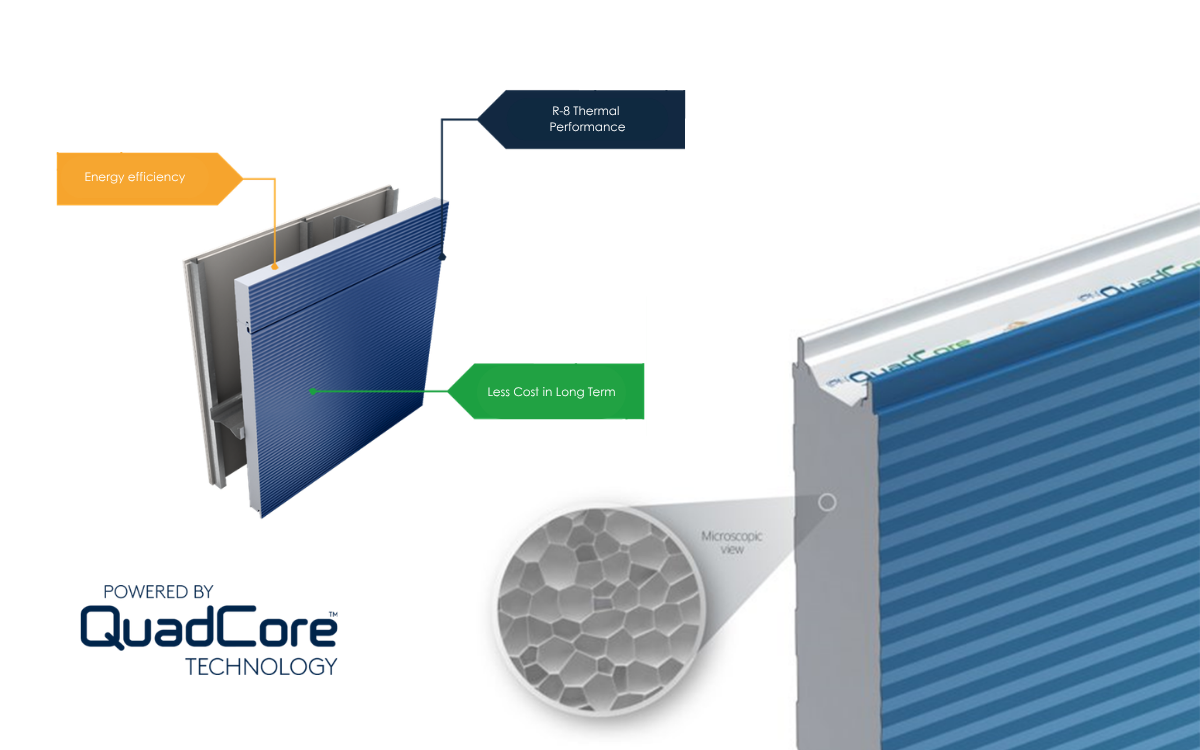
And cost savings with QuadCore™ Core Technology
Kingspan
introduces innovative QuadCore™ technology to the Mexican market—a next-generation
hybrid core that will be available soon. This technology has been developed to
offer even higher thermal performance compared to a PIR core.
Published
data indicates that:
- QuadCore™ achieves an R-value of up to 8.0 per inch, measured according to ASTM C518.
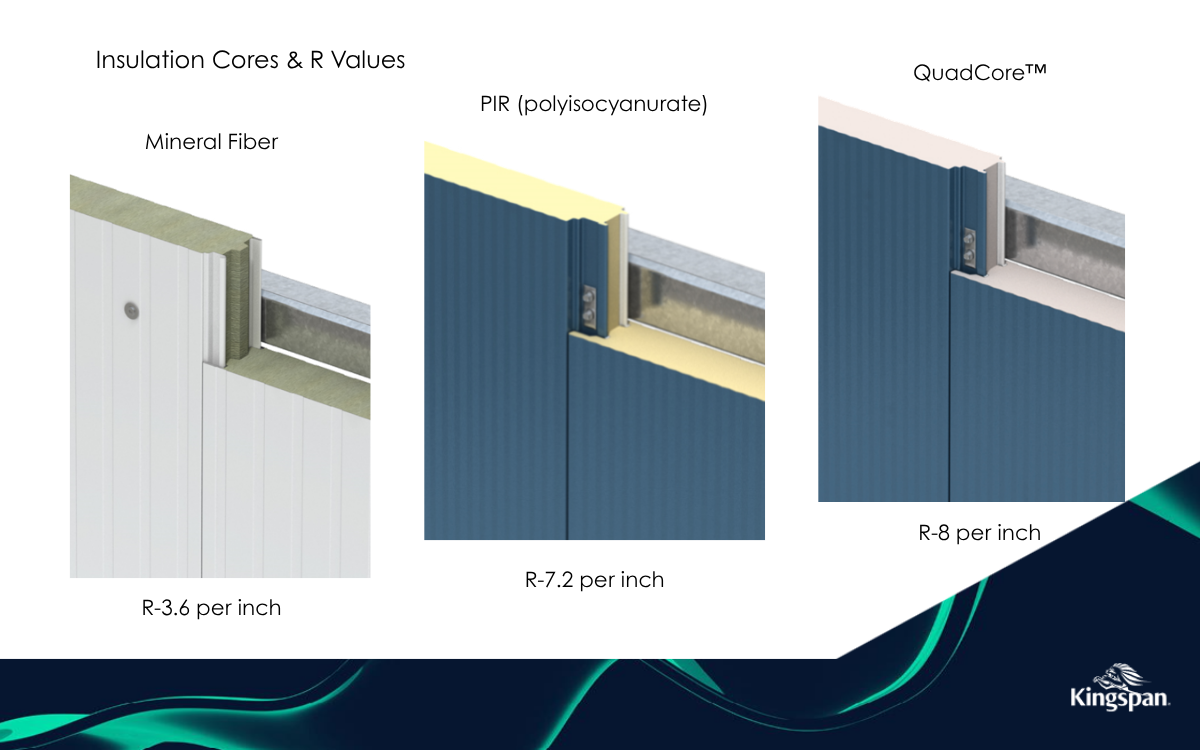
This higher R-value indicates increased thermal
resistance compared to standard PIR formulations, which can contribute to
improved energy performance depending on project design
This allows
projects to:
- Achieve
higher levels of energy efficiency, leading to greater energy savings.
- Optimize
operating costs from the first day the building is in use.
For
architects and engineers seeking to design today with long-term projects in
mind that feature exceptional specifications, this technology opens a new
window of opportunity in insulated panels for walls and roofs, delivering
greater savings.
Please note that PIR and QuadCore™ values are based on published testing.

Comprehensive
project care using Insulated Panel Systems
Choosing a building system means choosing a
reliable partner. In this regard, Kingspan Mexico is positioned as a professional
supplier that supports you in meeting the real needs of architectural and construction projects, while also helping you anticipate
future savings.
Its value
proposition goes beyond just an insulation panel and includes:
- Professional,
prompt, and personalized service.
- Flexibility
to adapt sandwich panel systems to each project.
- Support with technical specifications from the early design stages.
- Drafting services to facilitate proper integration into the preliminary design.
- Training in the installation of panel systems.
- Manuals and technical literature
available and
accessible to designers and construction teams.
This
support helps ensure that the expected performance of a project is reflected in
a high-value final product right from the planning stage.
Choosing
well is strategically saving money with lower potential costs
In an industry
where every decision impacts long-term costs and performance, comparing only
the initial price can be misleading. When all key variables are analyzed—such as
thermal performance, speed of construction, energy efficiency, and operating
and maintenance costs—insulated panel systems emerge as an excellent option
that effectively addresses all of these factors.
Considering
R-values validated by certified laboratories, comprehensive technical support,
and next-generation technologies like QuadCore™ becomes a strategic factor. In
this way, insulated panels systems are increasingly considered a viable alternative that meets the industry’s current
demands: efficiency, speed, durability, and careful management of future
maintenance costs for the construction project compared to traditional systems.
Submit a request and our team will be happy to assist you:
Email: ventas@kingspan.com
A
specialized team can help you choose the most cost- and performance-efficient
insulated panel system for your project.