



BESS Systems: Real Solution or Just a Tech Trend?
By Israel Molina
September 8, 2025
In recent years, Battery Energy Storage Systems (BESS) have emerged as one of the most promising technologies to address the growing energy challenges the industrial sector is currently facing. Mexico, with its accelerated growth in manufacturing and industrial parks driven by nearshoring, is experiencing unprecedented pressure on the National Electric System. In this context, BESS stands out as a strategic alternative to increase reliability, capacity, efficiency, and competitiveness for industry.
Key Objectives of a BESS
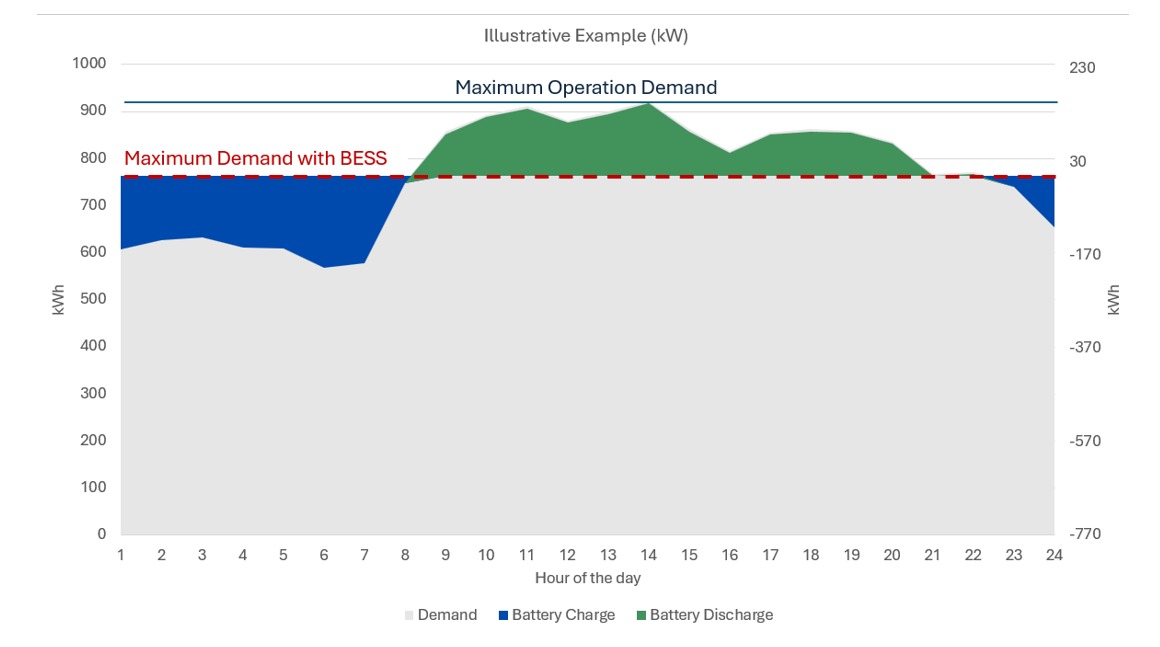
1. Peak Shaving, Demand Management, and Load Reduction
One of the largest costs for industry comes from demand charges during peak periods. A BESS “minimizes” those peaks by discharging stored energy during high-consumption hours, delivering savings of up to 30% for users under CFE Basic Supply. For Qualified Supply users, BESS reduces exposure to the Capacity Balance Market and the Locational Marginal Price.
2. Power Factor Improvement and Energy Efficiency
Low power factor is a common issue in industrial facilities, leading to extra charges on CFE Basic Retail bills. With a BESS, this cost can be turned into a credit. By reducing reactive energy (kVArh measured on the CFE invoice), the power factor improves, and electrical infrastructure is optimized. It also reduces system losses and enhances power quality inside the plant.
3. Optimization of Electrical Infrastructure (kVA)
Many industrial facilities face growth limitations due to the need for connected load expansions with CFE-Distribution. These kVA increases often require costly connection and reinforcement works that cannot be recovered. A BESS reduces the immediate need for infrastructure expansion, operating as a rapidly deployable technological asset.
4. Backup During Power Outages
Distribution lines reliability (medium-tension) remains a critical issue in Mexico, especially in regions with fast industrial growth. A BESS can provide instant backup during outages or voltage dips, ensuring operational continuity in sensitive processes and protecting production lines.
5. Integration with Renewable Energy
BESS makes onsite clean energy consumption more efficient. When combined with solar panels or wind generation, batteries store excess energy for use during peak hours or periods of high grid demand—cutting both costs and CO₂ emissions. For export-oriented industries, a BESS that optimizes renewable integration can be a strategic differentiator.
Conclusion
Battery Energy Storage Systems are a powerful tool for industry in Mexico to tackle the challenges of energy cost, reliability, and the energy transition. While there are still technical and economic limitations, the global trend points toward rapid sector maturity, with competitive pricing and growing operational experience.
At Denali Energy Partners, we provide an agile and accurate methodology for evaluating projects. BESS is not for everyone. A thorough analysis of consumption profiles and objective simulations is essential, considering both technical and financial factors before making investment decisions. - Laurent Meulemans, President of Denali Energy Partners.
Denali Energy Partners
539 W. Commerce St #254 Dallas, TX.
+ 1 956 391 8594
info@denali-ep.com
https://www.denali-ep.com/